

Know, how: Bitcoin legal in singapore
| Tipping bitcoin | When did the bitcoin cash fork happen |
| Btc instant withdraw | Sanskrit btc first semester paper |
| Bitcoin lausanne | Btc up board result 2019 |
Crypto license in Singapore

The revolutionizing blockchain technology is gradually winning over the governments and companies around the world. This holds not only for crypto-friendly Western countries, but for the Asian region as well. Asia is known as a very important area for cryptocurrency projects. Mining farms, big exchanges and many ICOs have found their home here. Singapore is among those countries that are willing to regulate cryptocurrency projects while being aware of the risks, associated with some of them.
Registering a crypto exchange in Singapore should not be a problem if the requirements set by the regulator are met. As for ICOs, despite the initial hostile policies, it is now possible to launch them legally in Singapore as well. To do that, you are required to obtain relevant crypto licenses in Singapore. It should be noted, however, that only ICOs that distribute “digital tokens which constitute securities, securities-based derivatives contracts or units in a CIS” are allowed for now.
Legislation and regulators of cryptocurrencies in Singapore
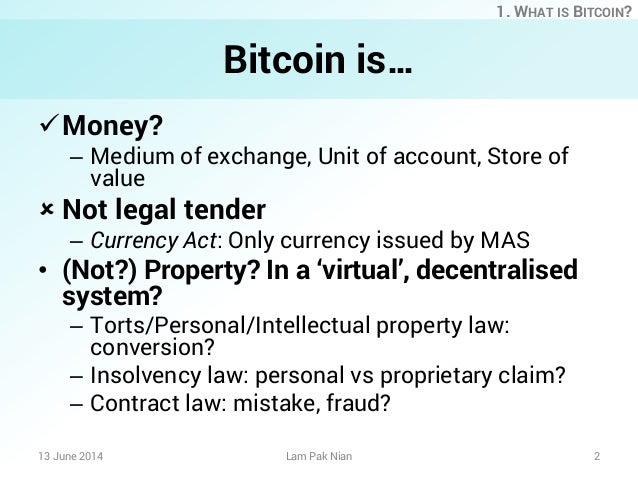
Regulation of cryptocurrency and blockchain projects in Singapore is done by the central bank MAS (Monetary Authority of Singapore). According to the managing director of MAS, this bank welcomes cryptocurrencies and regulates not them, but potentially risky activities that involve them. Even though MAS essentially performs most of crypto regulations in Singapore, it can only publish guidelines which are not legally binding: “The contents of this guide are not exhaustive, have no legal effect and do not modify or supersede any applicable laws, regulations or requirements”. Nevertheless, MAS is officially recognized as the Authority on securities and exchanges.
While there is no crypto law in Singapore as such, a lot of projects, such as ICOs and crypto exchanges must comply with the Securities and Futures Act (SFA), since crypto tokens are often treated as securities in this country. According to it, an exchange has to be approved and pay annual fees. Moreover, an exchange has the following obligations:
- To notify the Authority of any changes of the main information, related to its operation;
- To manage risks efficiently;
- To record transactions;
- To make reports to the Authority on regular basis;
- To assist the Authority when required;
- To be confidential about user information and employees, unless the Authority or order of court states otherwise.
Since there can be many unclear points about risk management, how detailed should the reports be and what kind of assistance should be provided to the Authority, you should hire a legal advisor to avoid issues that can result from misinterpretation.
If a company wants to start a cryptocurrency project in Singapore, apart from the obligations that were mentioned above, it also needs to have a specific administering structure, that includes a CEO, a Chairperson and the Board of Directors that must have at least four committees, responsible for appointments, auditing, resolution of conflicts and salaries respectively.
Working with cryptocurrencies in Singapore
Cryptocurrencies are legal in Singapore, but license on work with cryptocurrencies is required for ICOs and crypto exchanges. Traders are also required to obtain a crypto license to maintain professional activity. Apart from securities-related licenses, there is a financial adviser’s license which should be obtained by companies that provide advice on financial operations with tokens. In some cases, such companies must comply both with the SFA and the FAA (Financial Advisers Act), while in other cases only the FAA is relevant to them. A legal and financial advisor can help to determine which Act(s) your business must follow. It goes without saying that to obtain a crypto license, one must follow the guidelines of MAS on relevant matters.
Taxation of cryptocurrency projects in Singapore
Taxes in Singapore for cryptocurrency projects are considered mild and depend on the type of business as well as cash flow. If you receive revenue in cryptos, you should pay income tax that varies from 0% (if your income is below $20,000 per year) to 22% (if income is above $320,000 per year). Losses and capital gains are not taxable. The latter means that trading and long-term investment are treated differently in terms of taxation in Singapore. If you purchase cryptocurrencies and hold them, you do not have to pay taxes. If you trade them on regular basis, you do. It is also worth noting that according to some sources, if cryptos are used in gaming industry, they are tax-exempt in this country. To sum up, there is no taxation of cryptocurrencies as such, but income tax is applicable.
Operation of crypto exchanges in Singapore
Registering cryptocurrency exchange in Singapore requires a special license. As crypto exchange is mainly a platform for trading, it is regulated under the SFA along with other security exchanges. However, special attention should be paid to what is listed on a crypto exchange. If they are crypto tokens, then this exchange is regulated by the SFA. If, however, there are only cryptocurrencies, it is not subjected to regulation.
The main requirements to get a license for crypto exchange are that it must provide security for their users’ funds, prevent money laundering and financing of terrorism, keep track of transactions and report any suspicious activities. While there is no KYC requirement for now, it is advised to request identification from customers to avoid fees for non-compliance with anti-money laundering and counter financing of terrorism requirements.
Apart from licenses related to securities, there also exist licenses for financial advisors in Singapore. However, as exchanges are usually not providing advice, financial licenses for crypto exchanges in Singapore are not required.
Launching an ICO in Singapore
Holding an ICO in Singapore used to be risky. MAS was against regulating such projects because of the risks associated with them. However, as popularity of crypto projects was growing, the Authority decided to publish guidelines for ICO regulation in Singapore.
According to them, if you want to launch an ICO, you need to comply with the SFA first. That means preventing fraudulent activities, securing funds of customers even if the issued tokens are not securities. Moreover, a license for blockchain project that in this case is called ‘capital markets services license’ must be obtained. Once all that is done, you can proceed with the ICO completely legally.

-
-